A Living Preparation for the Third Temple
Among the preparation projects for the Third Temple, a special and profound place belongs to the weaving of the Parochet (the Veil) for the Holy of Holies – a craft that joins artistry, tradition, halachic precision and the work of the heart.
The Parochet, which separates the Holy from the Holy of Holies, is not merely a woven sheet. It is a symbol of passage between worlds – between revelation and concealment, between human effort and the dwelling of the Shekhinah.
Out of this understanding, the Parochet of our day is being made – not as research alone, but as a living act of preparation.
Building the Loom – The Foundation of the Craft
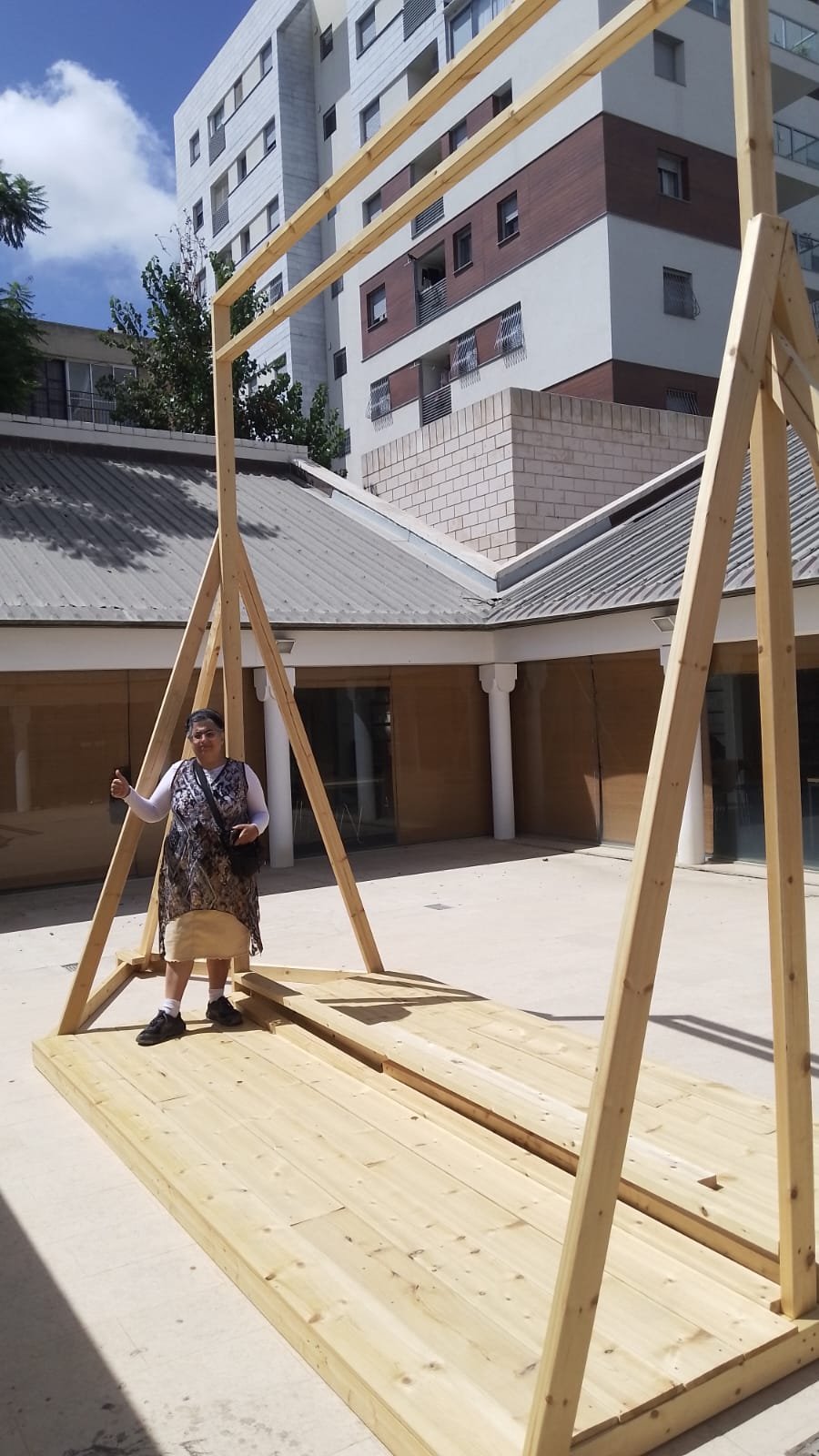
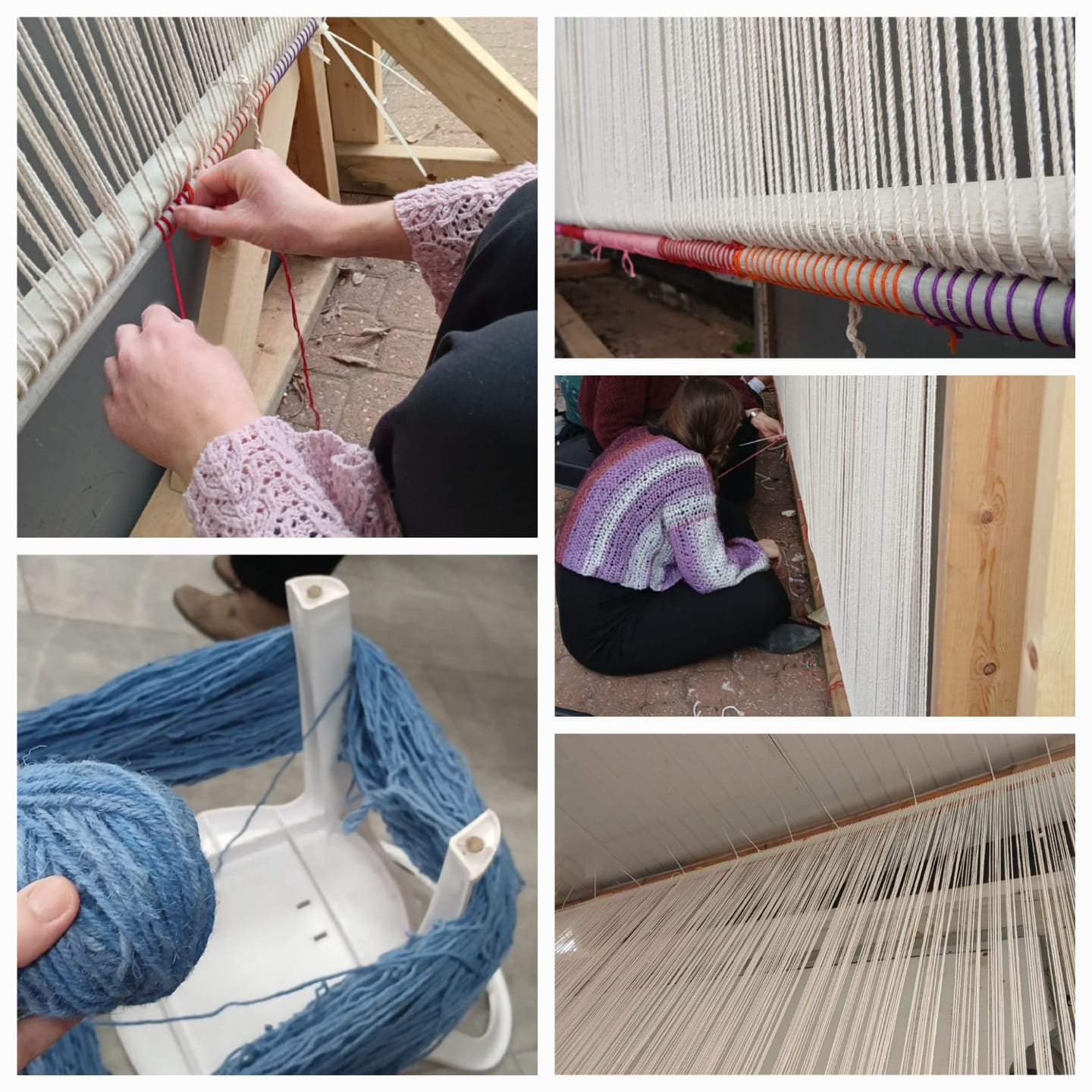
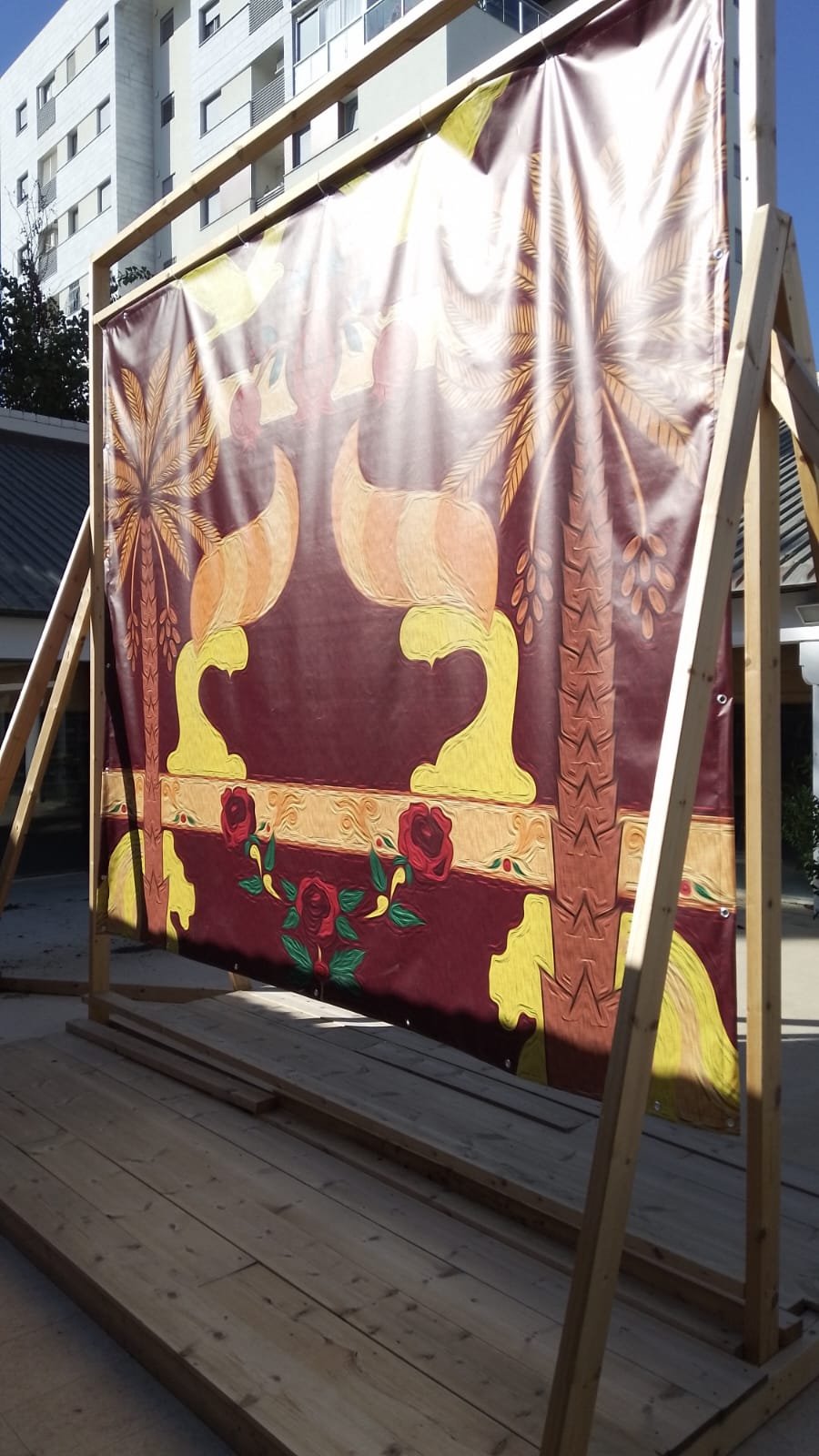
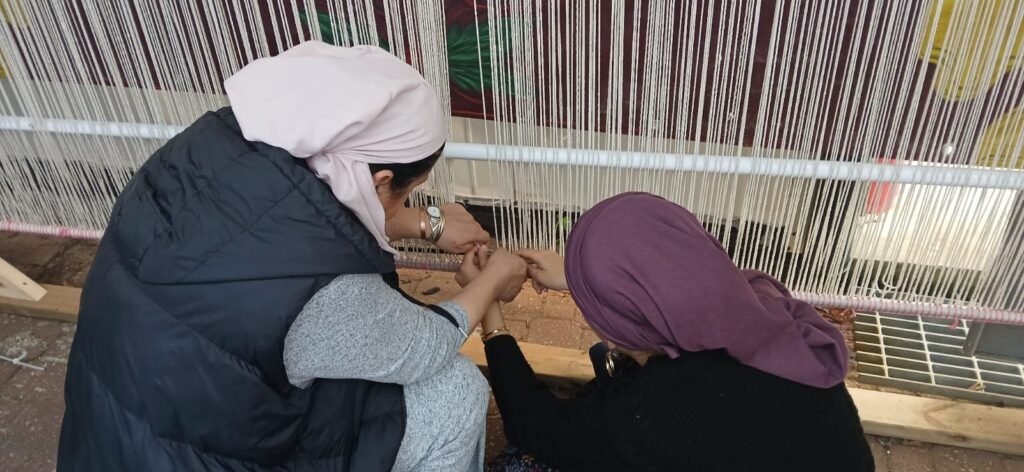
The first stage of the project was building a unique weaving loom, made specially to match the dimensions and structure required for a true, full-scale Parochet.
The loom is no ordinary craft tool. It is a precise system that allows full control of thread tension, of the width of the sheet, and of the structural accuracy of every fiber.
Building it required joining traditional weaving knowledge with the unique needs of a project of Temple significance.
Thus the loom itself became a vessel of preparation – not only for producing cloth, but for creating a reality of order, precision and holiness in deed.
The Heddles – Order Within the Threads
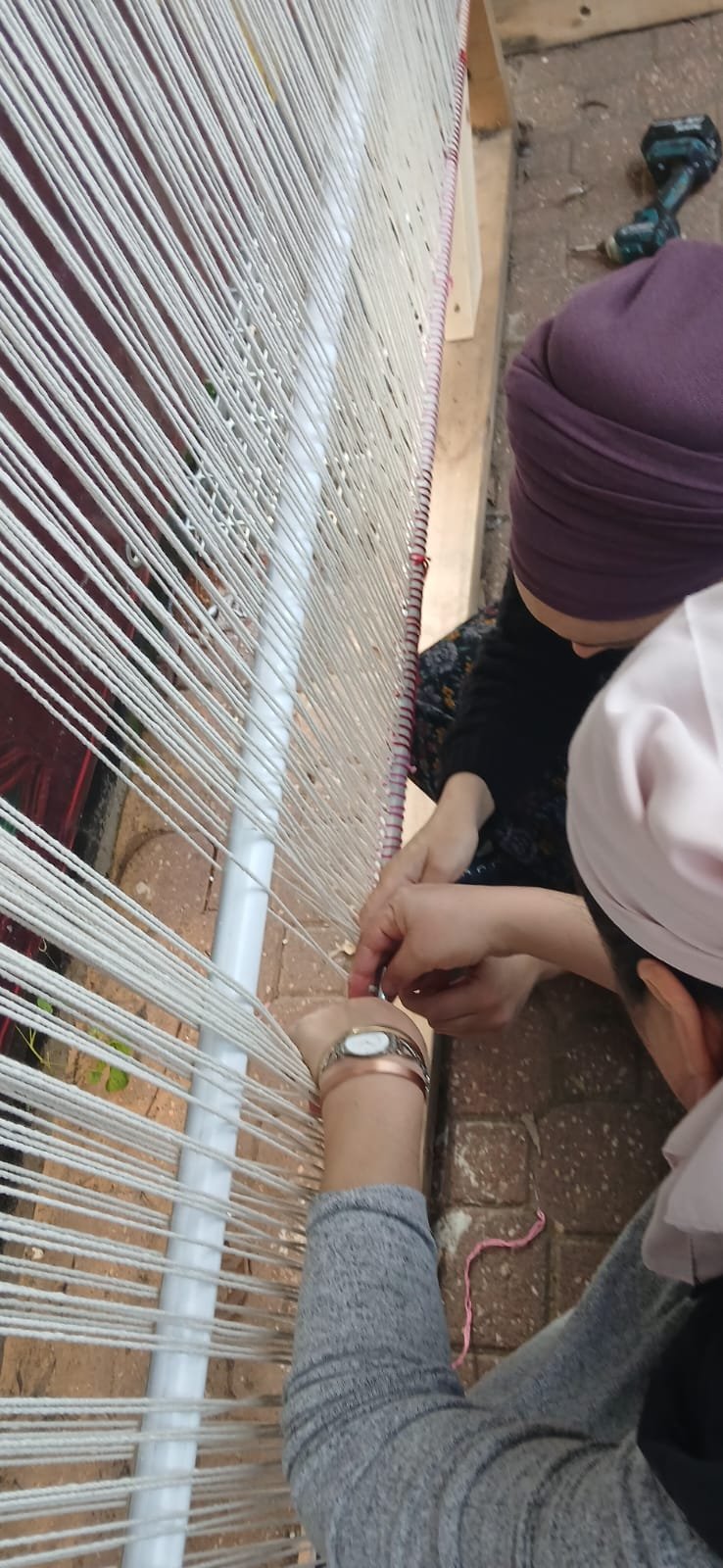
In the second stage, the heddles are set up – the system of threads and frames through which the warp threads pass.
The role of the heddles is to raise and lower groups of threads with precision, making the patterns and the weave possible.
In this project, special emphasis was placed on building a strong, balanced and precise heddle system, allowing long, continuous work without any deviation in the structure of the fabric.
The heddles express a profound idea: even within a multitude of threads there is order, distinction and an exact pattern – as in the Temple service, where a multitude of details forms one complete whole.
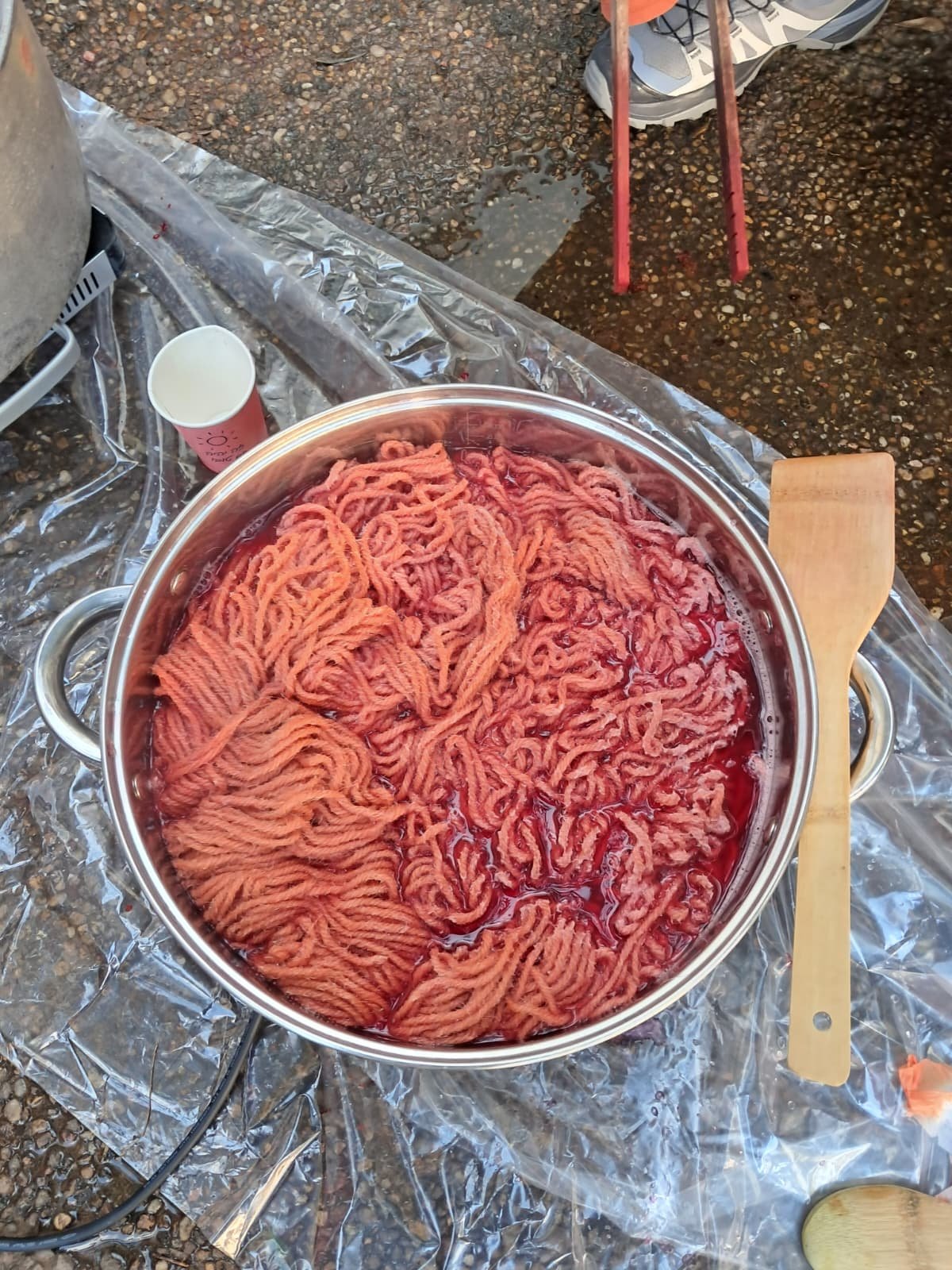
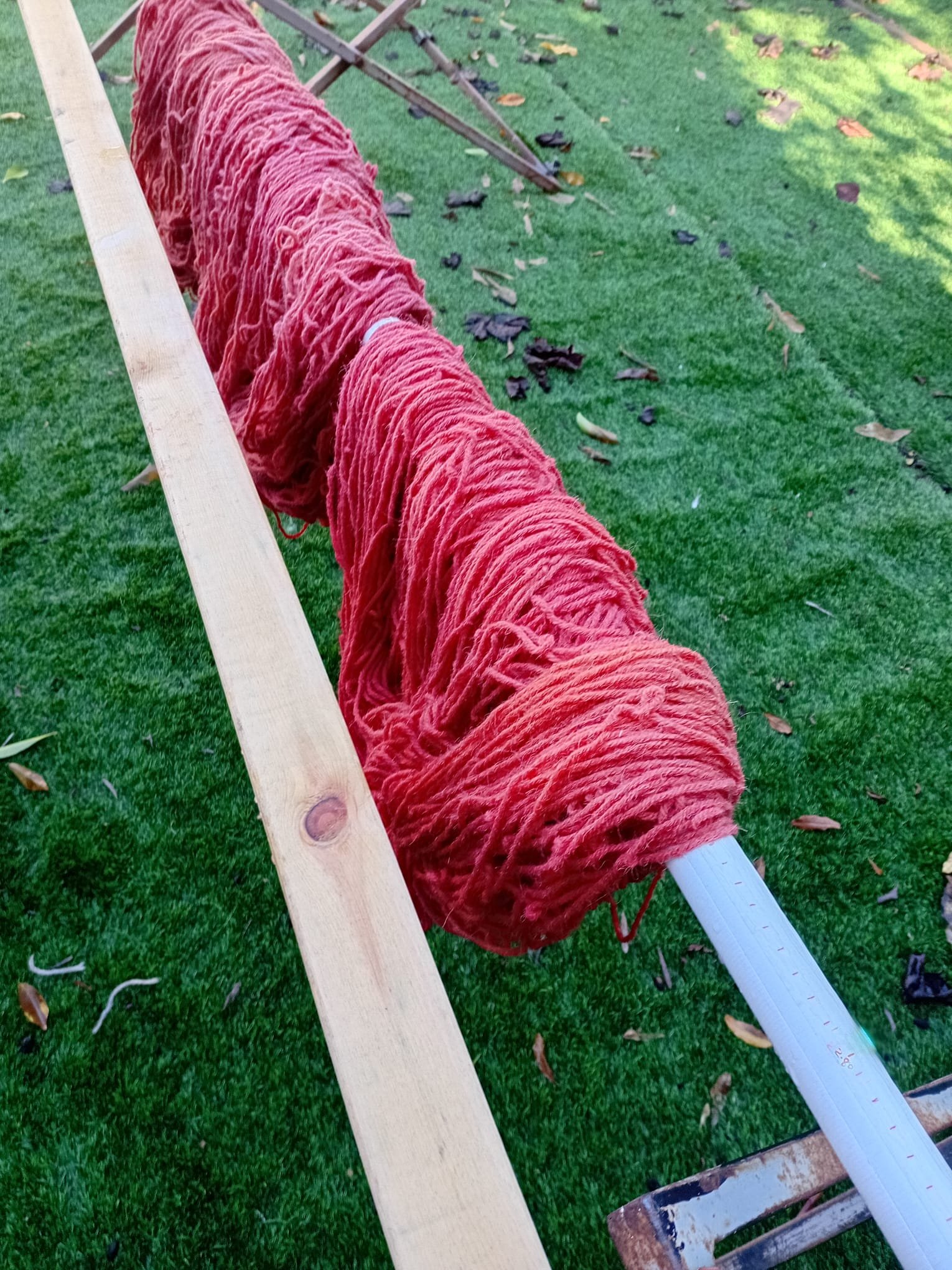
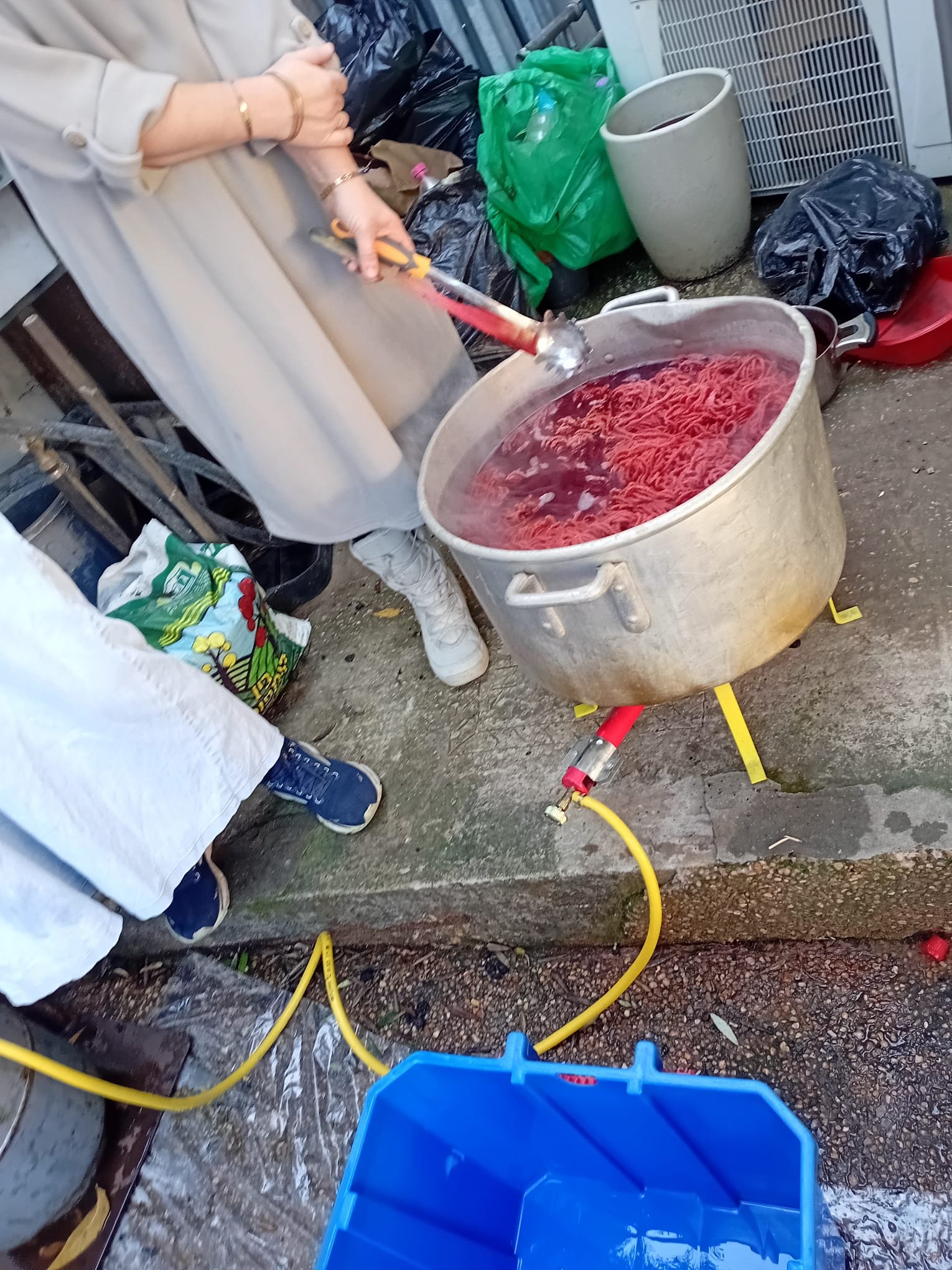
Dyeing the Wool – Preparing the Threads for Holiness
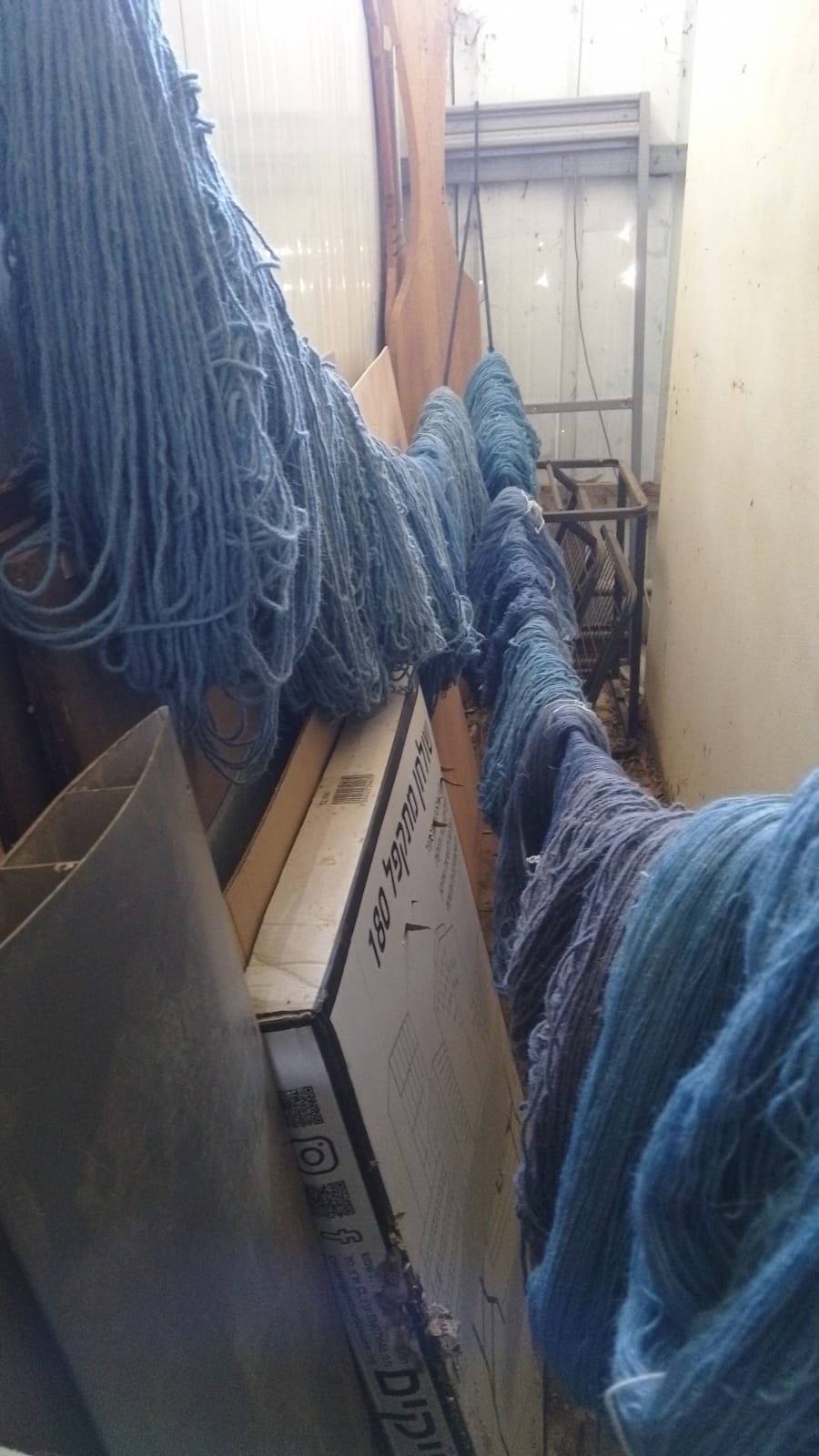
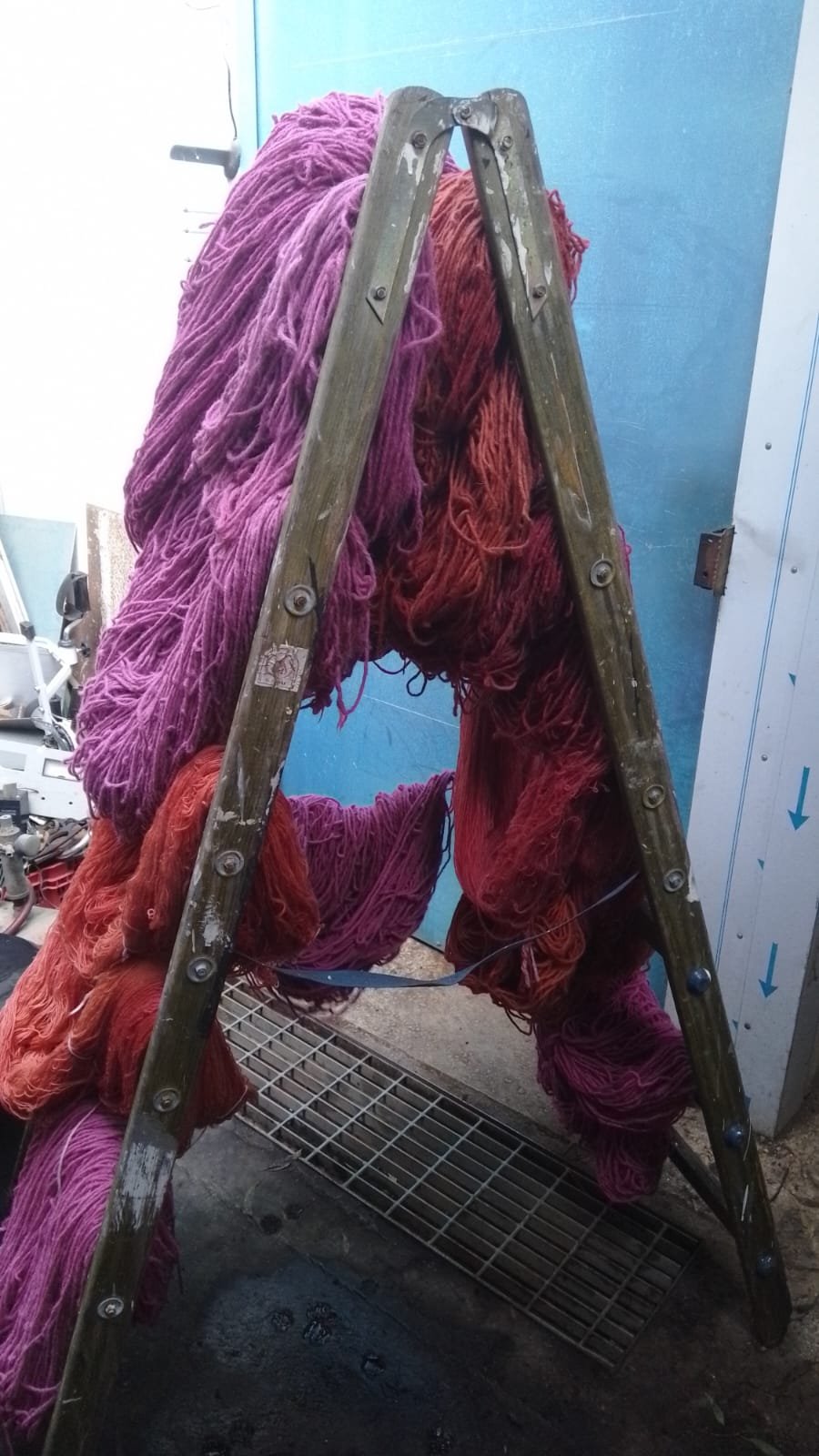
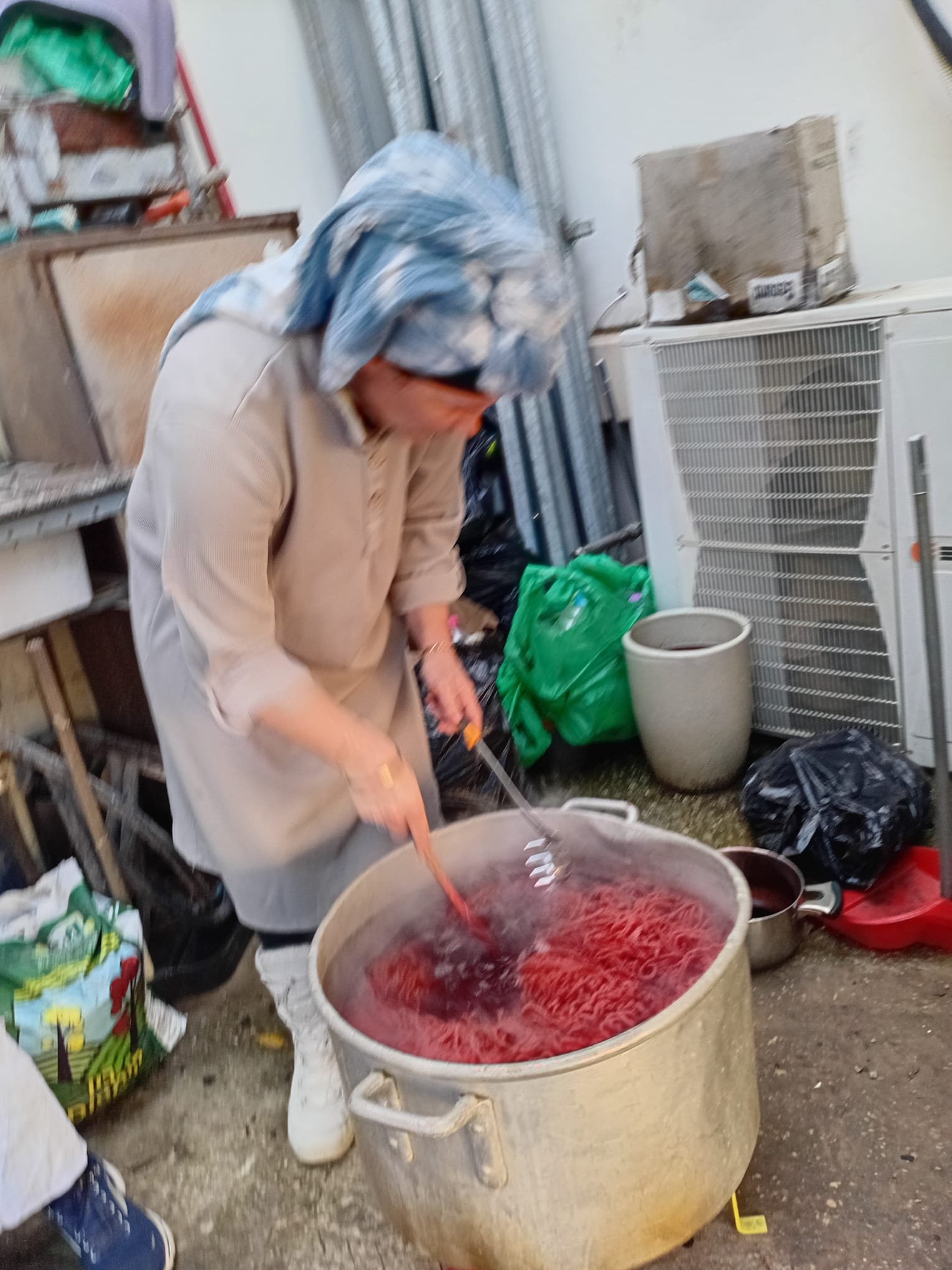
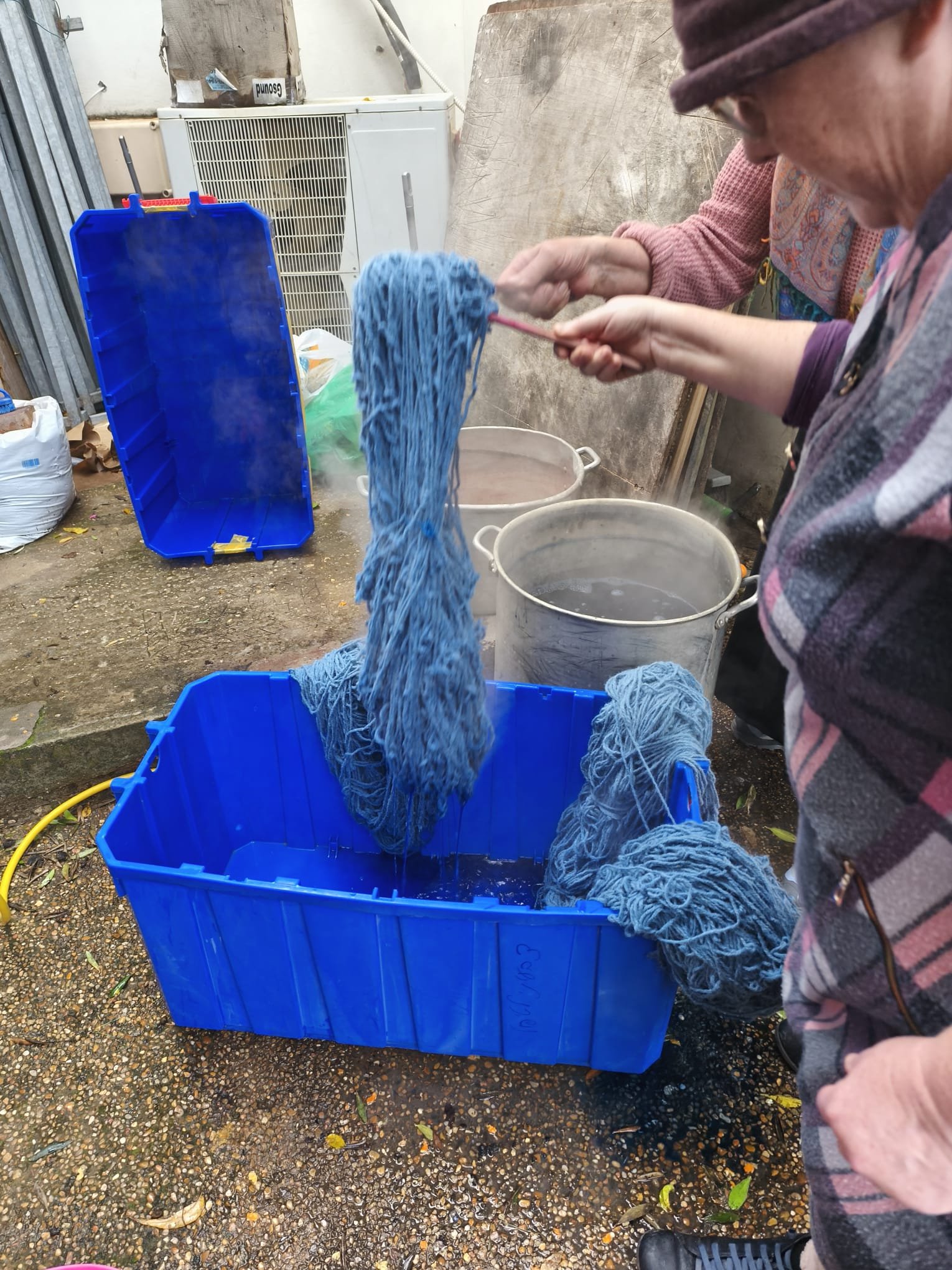
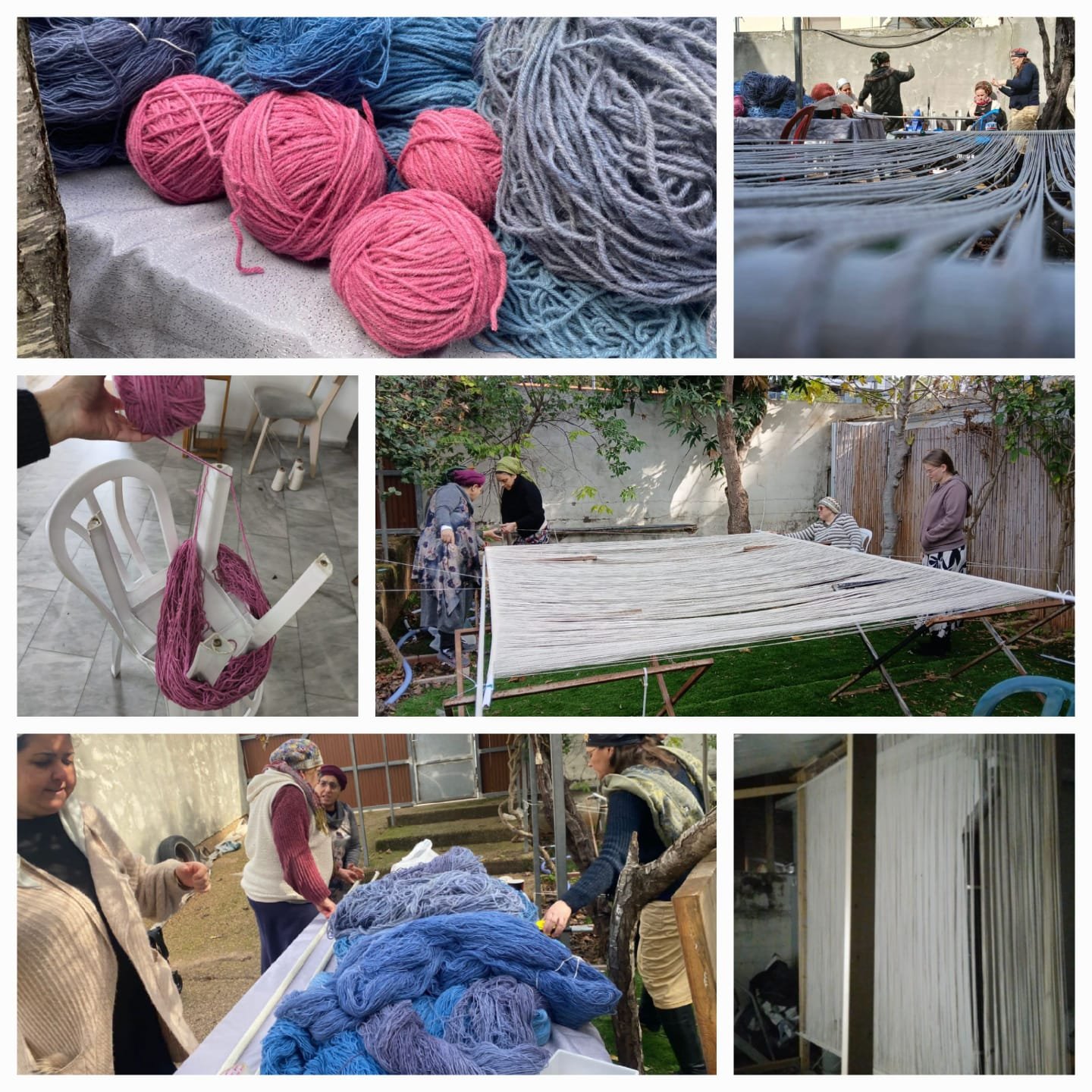
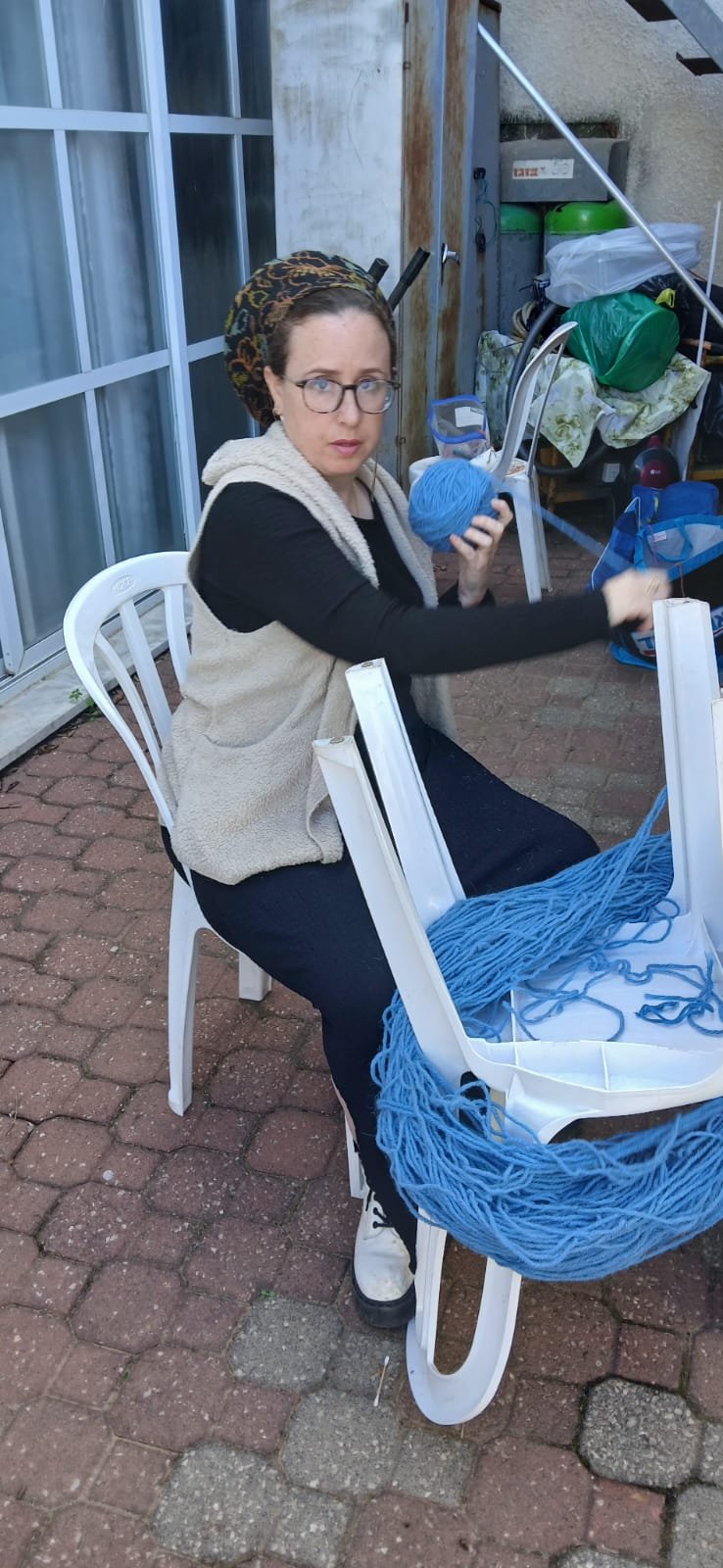
Before the weaving itself, the wool undergoes careful dyeing and preparation.
The threads do not remain in their natural color alone; they are prepared according to tradition and to the Parochet’s precise design.
The dyeing process includes:
Soaking and preparing the fibers.
Achieving a deep, even hue.
Ensuring the color’s stability over time.
Matching the warp threads and the weft threads.
This stage is not merely technical. It is a stage of inner preparation: the raw material is refined, set in order, and turned into a vessel worthy of delicate work.
The Warp – The Fixed Foundation
Weaving rests on two central systems: the warp (shti) and the weft (erev).
The warp threads are the fixed base of the fabric. Stretched along the full length of the loom, they form the foundation on which all the weaving is built.
In this project, special attention is devoted to the tension, alignment and precision of the warp threads, for any deviation in them affects the entire structure of the Parochet.
The warp threads express a principle of constancy and stability – the foundation upon which all movement is built.
Weaving with the Pelekh – The Living Craft of the Hand
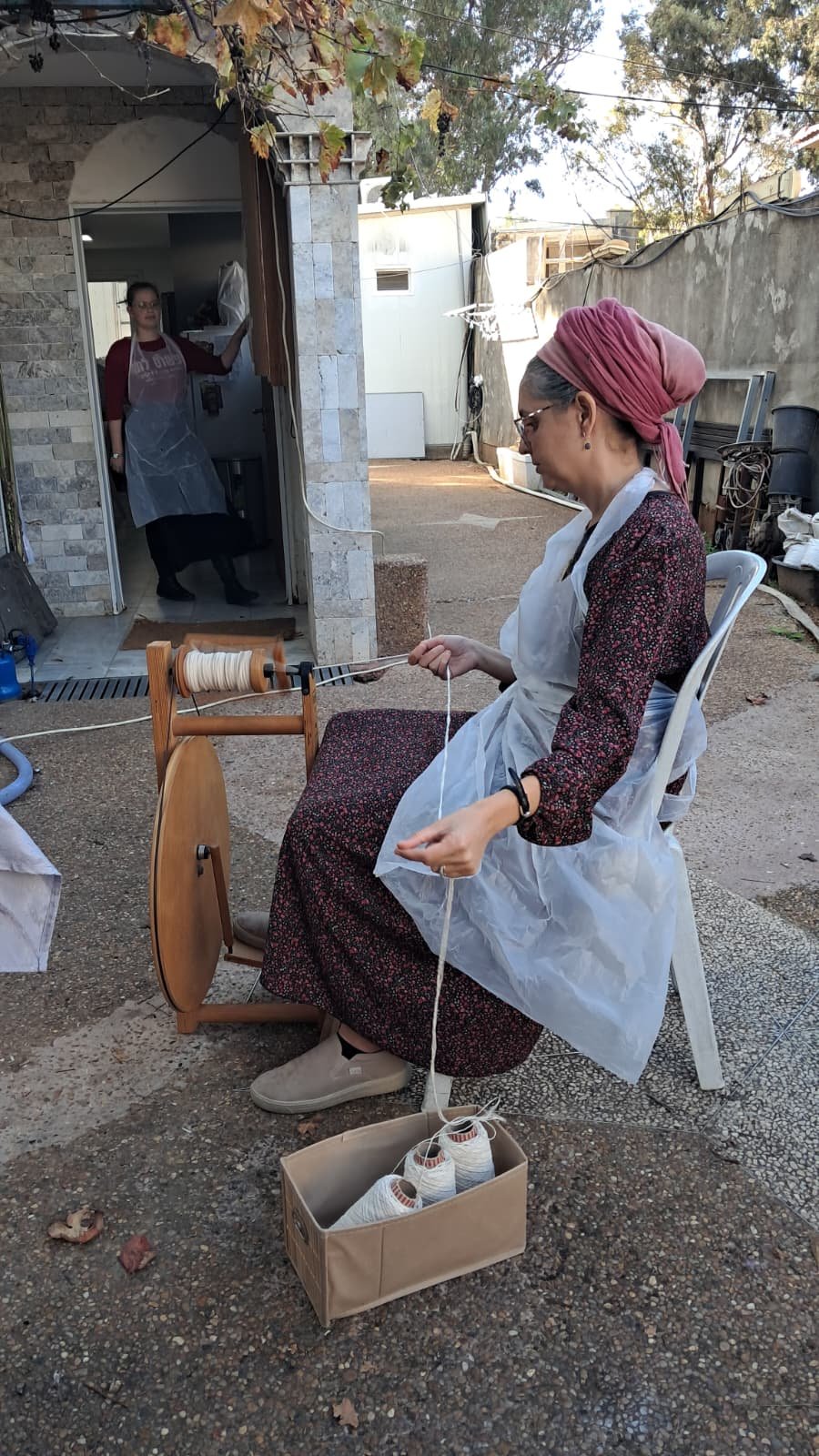
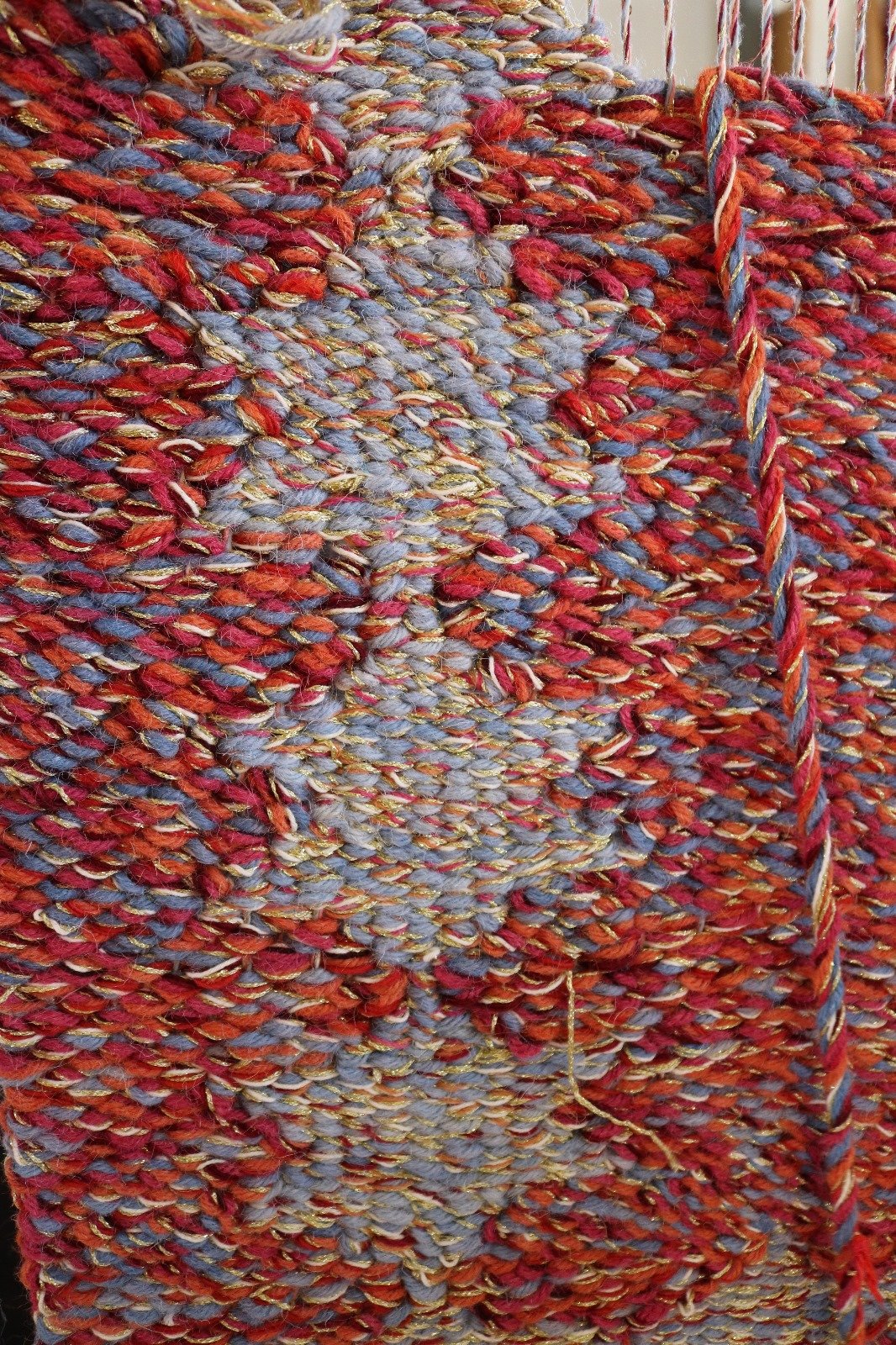
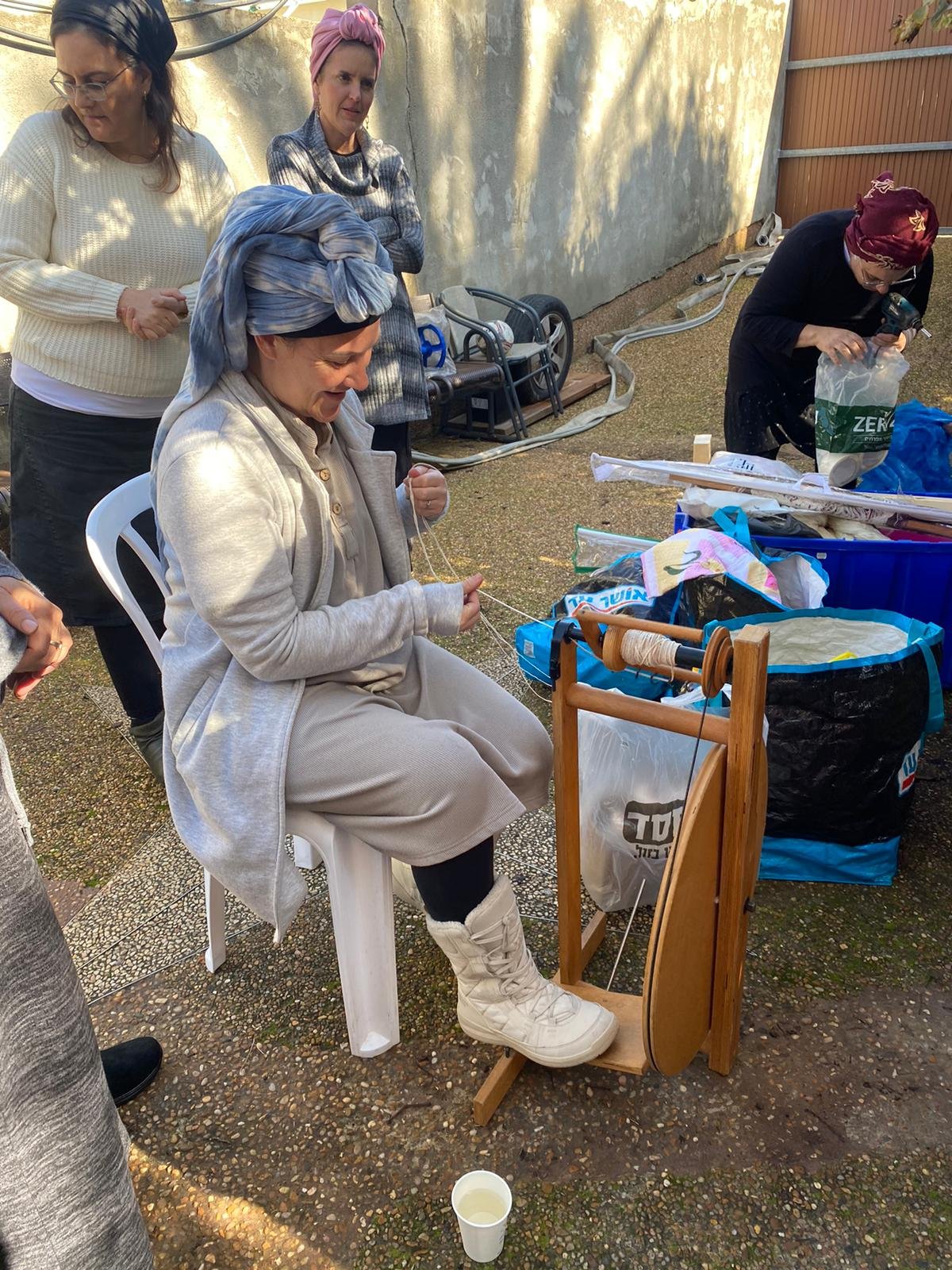
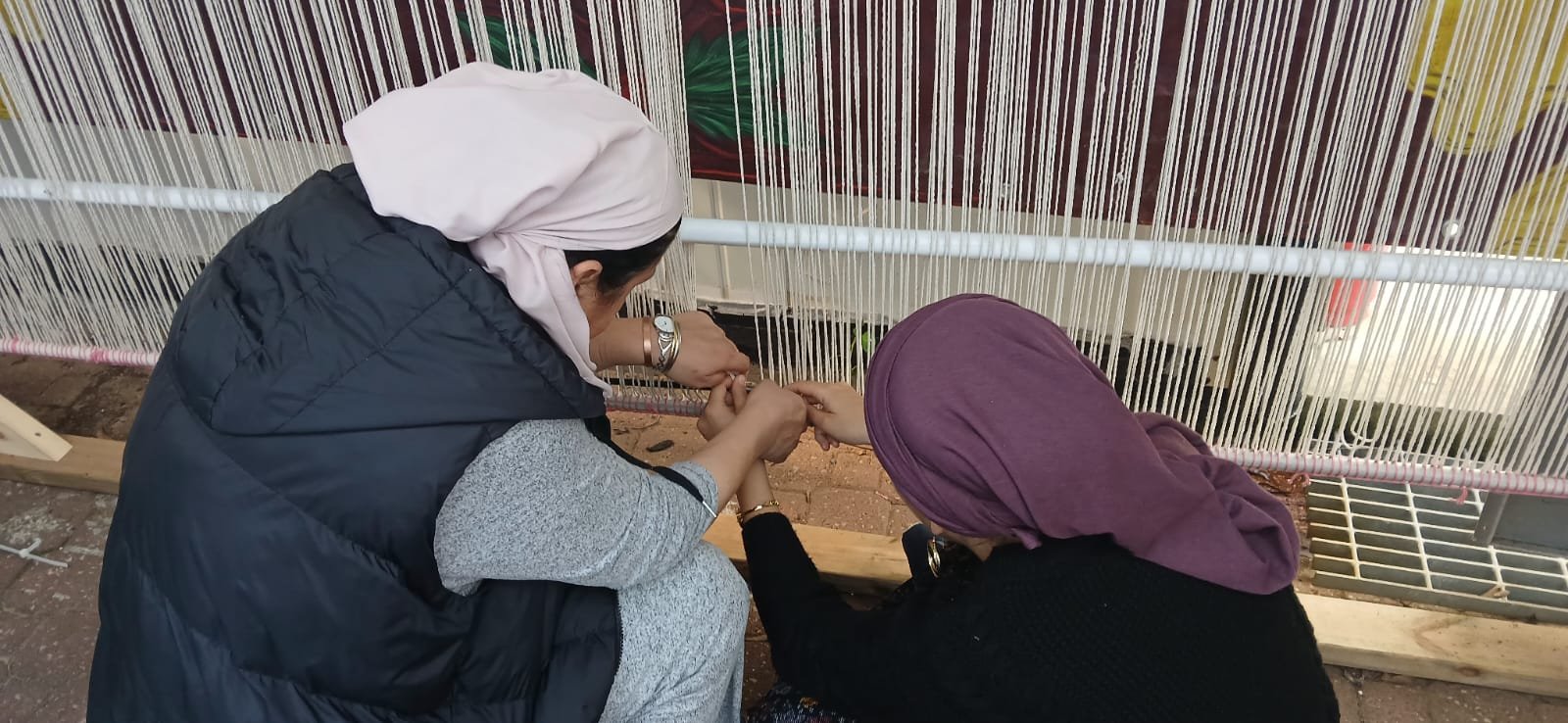
Once the loom, the heddles, the dyeing and the warp are ready, the craft itself begins: weaving with the pelekh (spindle).
The pelekh shapes the weft thread and carries it between the warp threads, forming an even, precise pattern.
Every movement of the pelekh is an act of precision: inserting, beating, aligning, continuing.
The weaving proceeds at a steady rhythm, out of deep concentration, patience and perseverance.
In the course of the work, a special sense of connection is formed – between hands, threads, rhythm, and the breath of a long, exacting craft.
A Team Effort of Faith
The project takes place in working groups of devoted women, who gather regularly for weaving sessions.
Each session is several hours of quiet, precise, intention-filled work.
The shared work creates not only a Parochet, but also a community of doing, learning and devotion.
A Vision-Scale Undertaking
The Parochet is woven at full scale, according to the tradition and the Temple measurements as handed down through the generations.
This is a real attempt to turn Torah and historical knowledge into a tangible act of preparation.
Not a model alone, but a living process joining past, present and future.
Spiritual Meaning – Between Two Worlds
The Parochet stands precisely where two worlds meet: the Holy and the Holy of Holies.
It is not merely a partition. It is the symbol of a delicate boundary between revelation and concealment, between presence and absence.
In weaving it anew, an inner call is also born: to prepare the vessels, to attune the hearts, and to draw near to the hour when the Shekhinah returns to its place.
The Vision of the Project
The vision of the project is one:
To turn the Temple from study into reality.
To turn memory into preparation.
And to turn longing into deed.
In every thread that is woven, in every movement of the pelekh, and in every layer of cloth taking form, a quiet prayer is interwoven:
May we soon merit to see the building of the Third Temple, the sacred service, and the Shekhinah dwelling among us in mercy.
“The Lord rebuilds Jerusalem; He gathers the dispersed of Israel.” (Psalms 147:2)